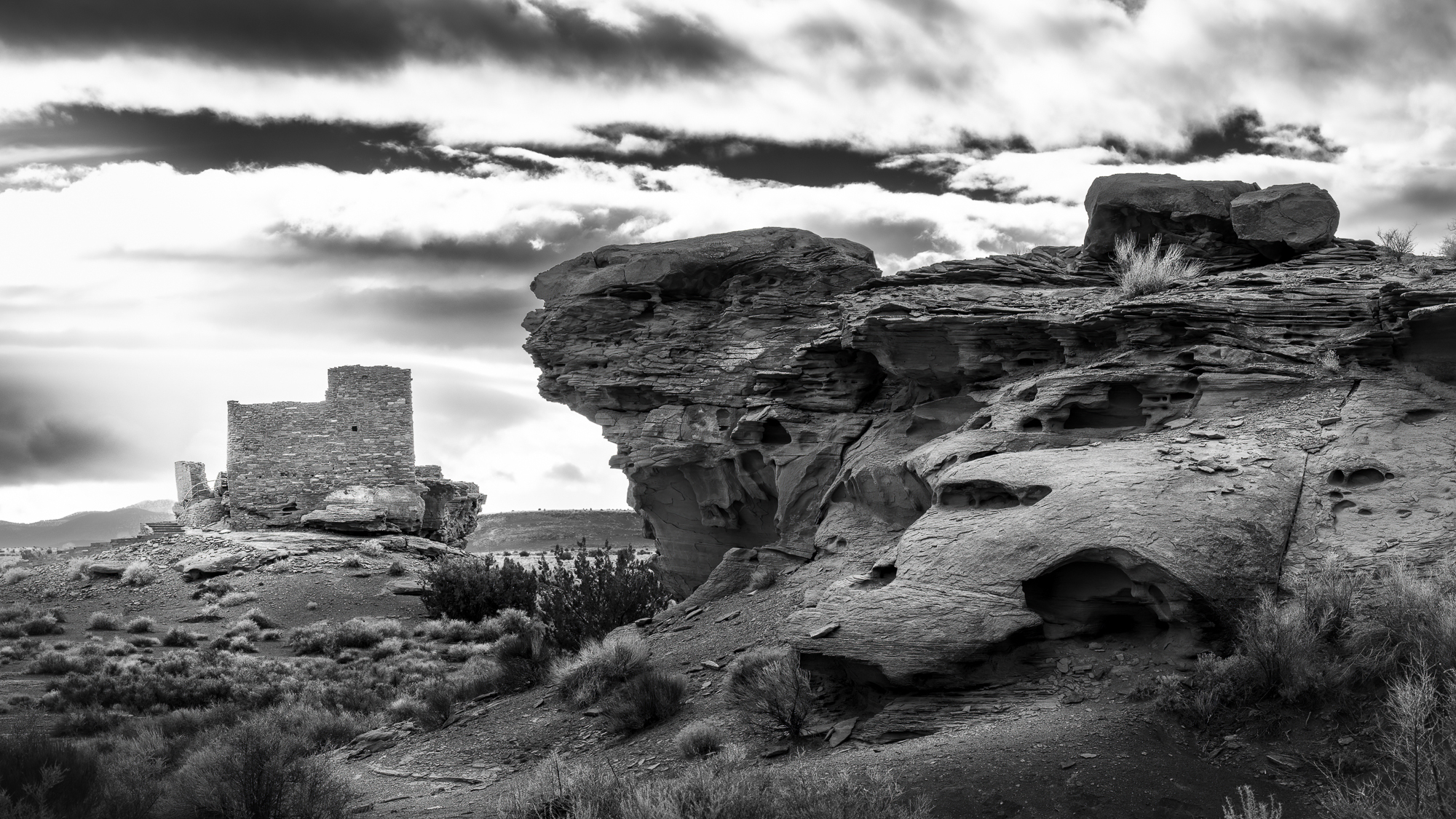
High on a rock beneath the painted sky,
Above the stretch of Arizona plain,
The ancient walls of red Wukoki lie,
And wait for hands that will not build again.
The wind sweeps through the window's empty stone,
Where fires danced and woven baskets lay;
Now quiet spirits walk the dust alone,
As centuries of silence slip away.
Discarded by the march of heavy years,
It stands defiant in the desert sand,
Unmoved by mortal, fleeting joys or fears,
A lonely fortress in an empty land.
Though time may seek to wear its mortar down,
Wukoki wears the mesa like a crown.
If you were to stand atop the red sandstone outcropping where Wukoki sits, you would feel a strange sense of isolation compared to the bustling ruins of the main Wupatki complex just a few miles away. While Wupatki was a cosmopolitan hub—a "Manhattan of the Desert" fueled by the volcanic riches of Sunset Crater—Wukoki stands apart, draped in a quiet, regal dignity.
To understand Wukoki is to understand that it wasn't just a building; it was likely the spark or the crown of the entire region.
Fire That Fed the People
Around the year 1085, the ground began to scream. A few miles to the south, Sunset Crater tore open the earth, spewing fountains of fire and a thick, black shroud of volcanic ash across the landscape. To any witness, it must have looked like the end of the world.
Yet, in the strange alchemy of the desert, this disaster became a miracle. The layer of black ash acted as a natural mulch, trapping the precious moisture of the winter snows and summer monsoons in the thirsty soil. Suddenly, a land that had been too dry for corn became a garden.
Word of the "Black Sand" spread. Families from all directions—the Kayenta, the Cohonina, and other Ancestral Puebloans—migrated to this new land of plenty. They built Wukoki on a high sandstone outcrop, a "lonely fortress" that served as both a home and a beacon.
First Hearth of the High Plain
Some storytellers and archaeologists believe that before the grand plazas of Wupatki were even a blueprint in the dust, Wukoki was already there. It may have been the "first stone"—the original settlement that proved life could flourish in the wake of the volcano’s fire.
When the ash from Sunset Crater turned the parched earth into a fertile garden, Wukoki rose first, a beacon for the migrating families. It wasn't just a home; it was a testament. Its "ancient walls of red" may have served as the anchor for the entire civilization that followed, the foundation upon which the great city of Wupatki was eventually built.
A Great House for a Golden Lineage
Others look at the high, tower-like architecture of Wukoki and see something more exclusive. In the desert, height is a symbol of sight and status. Because Wukoki is built on such a prominent rock—"wearing the mesa like a crown"—it is widely thought to have been a Great House for a significant family of Wupatki. Imagine a lineage of influence—perhaps the priests who understood the cycles of the sun or the merchants who controlled the flow of turquoise and macaw feathers. This was their sanctuary. From the "window’s empty stone," they could look out across the Arizona plain, watching the trade caravans approach from miles away. It was a residence of prestige, a "lonely fortress" that stood as a sentinel for the elite of the valley.
The March of Heavy Years
But the desert is a fickle landlord. By the mid-1200s, the "march of heavy years" began to catch up. The volcanic mulch eventually lost its magic—the winds swept the ash away, or the nutrients in the soil were spent. The rains became unpredictable, and the "quiet spirits" of the people realized it was time to move once more. They didn't "vanish" in the way mystery novels suggest; they simply "released the hand" of the tower. They packed their seeds and their stories and migrated toward the Hopi mesas to the east and the Zuni lands to the south.
A Crown That Remains
As the centuries slipped away and the "march of heavy years" drew the people toward the Hopi mesas, Wukoki was left to the wind. Whether it was the birthplace of the Wupatki spirit or the private palace of its most powerful family, it refused to crumble like the lesser structures around it.
Today, when the "quiet spirits walk the dust alone," they walk through a structure that was built to endure. The mortar may be worn, and the fires may have long since dimmed, but Wukoki remains: a defiant, stony king that still holds the high ground, waiting for the world to remember the "holy beauty" of its tower.