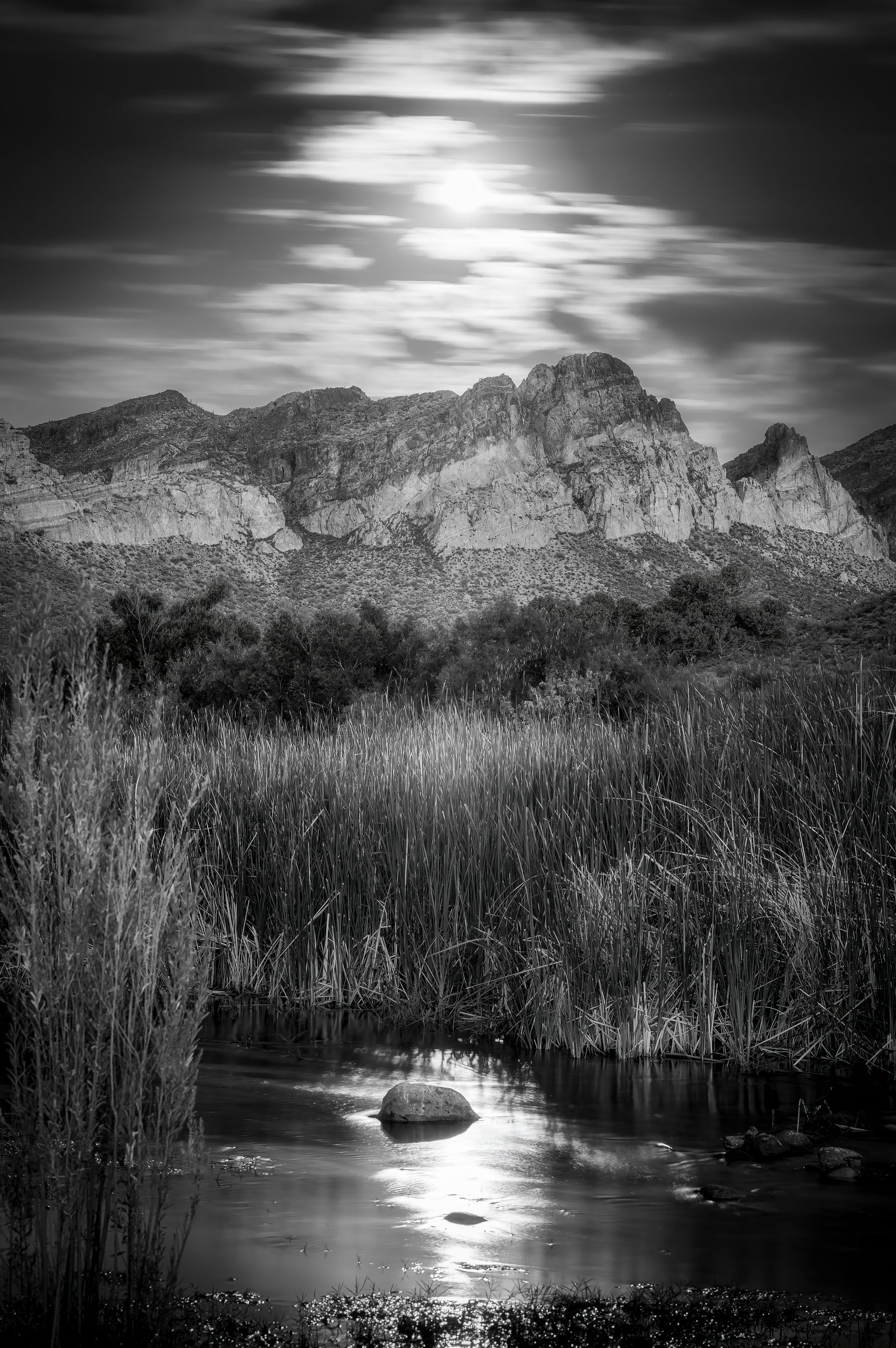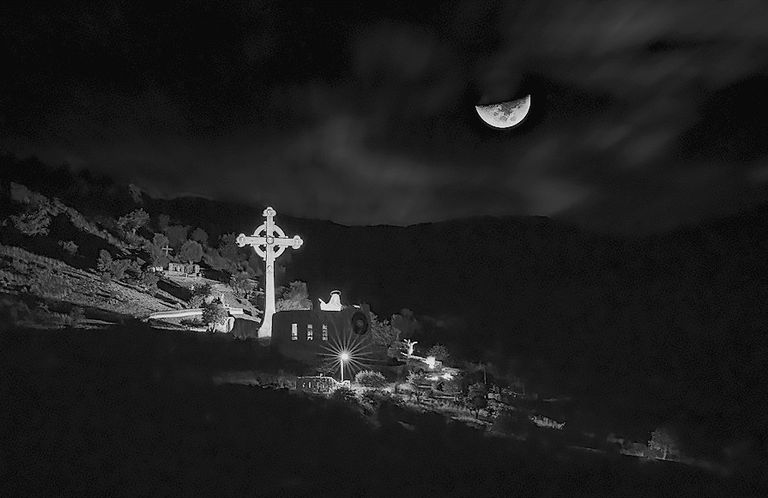
"The celestial sphere, with its cyclic presence and luminous mystery, has long served as a profound mirror for human contemplation. Of all the heavenly bodies, the moon possesses a unique and enduring visual power, simultaneously intimate and impossibly distant."
This essay, titled Lunaris Imago (The Lunar Image), delves into a curated body of black and white photographic work where the moon is not merely a feature in the night sky, but the singular, dominant subject.
Focusing exclusively on photographs captured across the high deserts and stark landscapes of Arizona, this collection leverages the region’s exceptionally clear atmosphere and vast, uninterrupted horizons. By intentionally stripping away the chromatic distractions of the modern world, the monochrome medium—defined by its dependence on light, shadow, and form—transforms the lunar subject. This study posits that the black and white rendering elevates the moon from a geological object to a spiritual and conceptual icon, where the stark visual contrast inherent to the Arizona desert serves to amplify the raw, elemental beauty of the interplay between the sun’s reflected light and the deep, consuming shadow of space. Lunaris Imago explores how these images, through the deliberate constraints of the medium and the context of the arid, powerful land, communicate a timeless meditation on scale, solitude, and the enduring human connection to the cosmos.
There is something deeply resonant about using the Arizona desert—a place that often feels like another planet—to capture the moon. By focusing on the interplay of light and void, I intend to essentially photograph the "geography of the Arizonan sky."