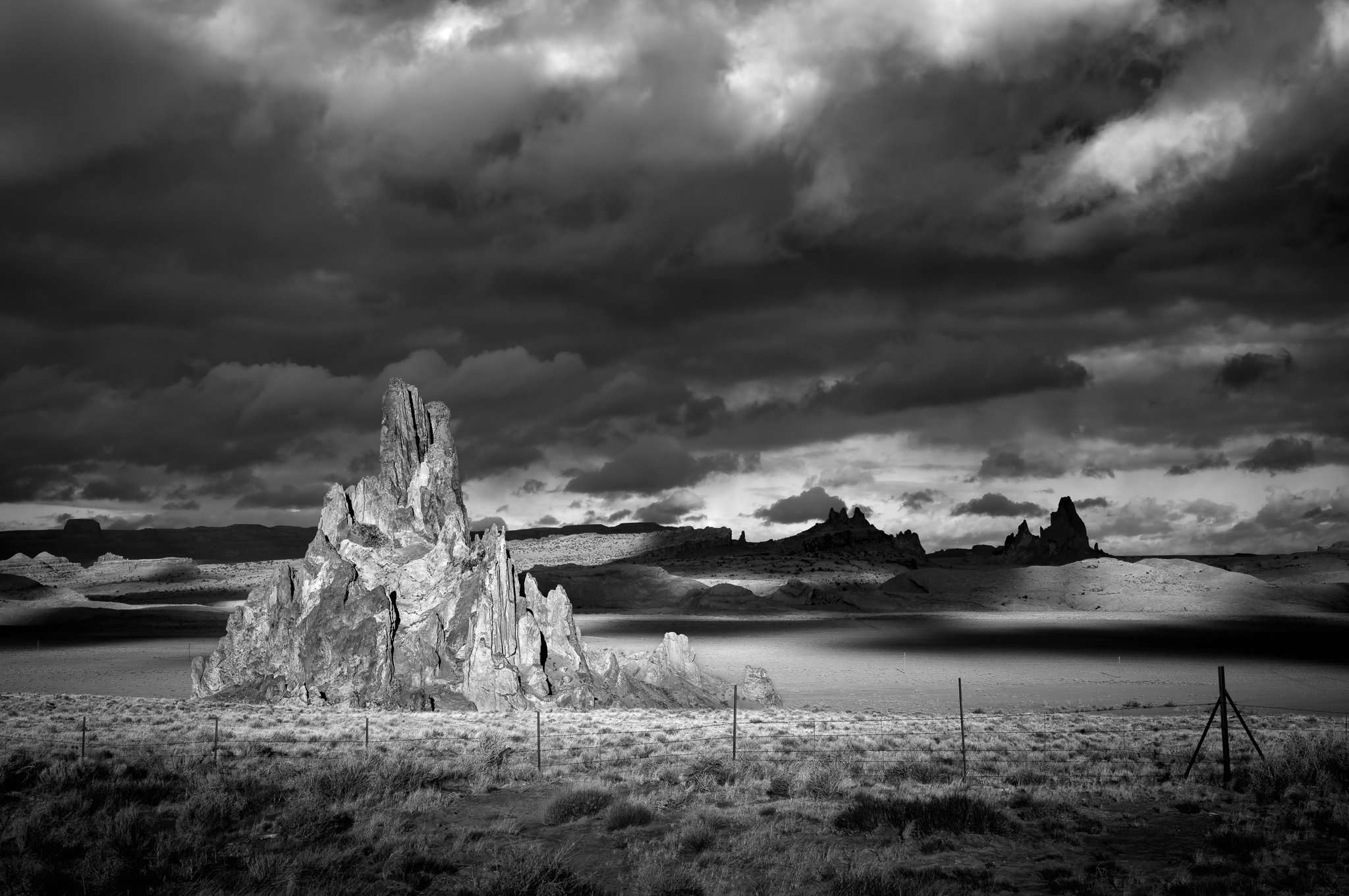
Along the dusty route of ancient sand,
Where brave Armijo carved the Spanish Trail,
Behold a sudden temple in the land,
That stands against the howling desert gale.
A church of solid rock beneath the sky,
A grand cathedral where the weary rest,
As merchants of the desert journey by,
To seek their fortunes in the golden west.
No human hands have built this holy nave,
No bronze or iron bell to sound the hour,
Yet blowing winds across the earthly cave,
Proclaim the holy beauty of its tower.
A stony shrine along the western way,
Where ancient ghosts of exploration pray.
If you were to follow the ghosts of the mule trains through the high, red Navajo dust of the 1820s, you would find yourself on a path carved by grit and the hunger for trade. This was the Armijo Route, the shortest and harshest link between the mountains of New Mexico and the missions of California.
And at the heart of this "ancient sand," there is a landmark that has watched every traveler pass for centuries.
The Merchant’s Vision
In the winter of 1829, a Mexican merchant named Antonio Armijo led sixty men and a hundred mules out of Abiquiú. They weren't seeking gold in the ground; they were carrying woolen goods to exchange for horses and mules in Alta California. As they pushed through the "howling desert gale," they came upon a sight that stopped them in their tracks. Rising abruptly from the flat, arid landscape was a spire of stone so deliberate in its beauty that it looked like the work of a master mason. Armijo didn't see just a rock; he saw a "sudden temple." He recorded it in his diary as Artenesales de Piedra—the Sculpted Rock.
A Grand Cathedral of the Weary
To those "merchants of the desert," the rock was more than a waypoint; it was a sanctuary. In a land of shifting dunes and jagged canyons, this solid nave of stone stood permanent. It became a place where the weary could rest their eyes on something that felt like home. Though "no human hands" had raised its walls, the wind whistling through the earthly caves of the formation sounded to the travelers like a "bronze or iron bell" calling them to prayer. Under its shadow, they found the strength to continue their journey toward the "golden west," knowing that if they could reach the Sculpted Rock, they were on the right path.
The Stony Shrine
Over time, the Spanish name faded from the maps, replaced by the modern title we know today: Church Rock. But the name change didn't strip the site of its power. It remains a "stony shrine along the western way," a monument to the first commercial caravan to ever bridge the distance between the Rio Grande and the Pacific.
When the sun hits the tower at a low angle, casting long shadows that "stretch across the canyon’s lair," you can almost see the dust kicked up by Armijo’s mules. It is a place where "ancient ghosts of exploration" still linger, reminding us that the desert is not a void, but a landscape filled with cathedrals of stone, waiting for a traveler to stop and notice their "holy beauty."