Upon red lands where ancient mesas stand,
A spirit walked, a guide named Grey Whiskers,
Whose heart was tied to this ancestral land,
He watched the sun on desert rock, it flickers.
He saw the beauty and the solemn grace,
The towering buttes, the arches in the sky,
And knew his people's history and place,
Should live beyond when he himself should die.
He spoke of sacred ground, of timeless art,
Of canyons carved by wind and patient rain,
And helped to give this vision a new start,
To save this land from thoughtless, worldly gain.
His legacy, a park, a people's pride,
Where shadows of his spirit still reside.
The Man Who Saw the Wind
Before the tour buses and the Hollywood cameras of John Ford arrived, the Valley belonged to the silence and the Hataałii—the medicine men. Among them walked Mr. Grey Whiskers. While history books often point to the trading posts and the settlers, the Diné (Navajo) know that the true heartbeat of this land was kept steady by leaders like him. He wasn't just a man of prayer; he was a man of the soil who understood that once you give your land away to a distant government, you never truly get it back.
The Line in the Red Sand
Back in the late 1950s, the outside world was closing in. There was a great push to turn these sacred spires into a U.S. National Park. To many, it sounded like a good deal, but Mr. Grey Whiskers saw the hidden thorns. He knew that a National Park meant federal rules, fences, and the potential displacement of the families who had grazed their sheep here for generations.
Alongside other tribal leaders, he stood his ground. He didn't want a "National" park; he wanted a Tribal Park. Because of his vision in 1958, Monument Valley became the first of its kind. He ensured three things remained true:
The Land Stayed Ours: The sovereignty of the Navajo Nation remained unbroken.
The People Stayed Home: The families living on the valley floor could continue their ceremonies and their way of life without being "managed" by outsiders.
The Story Stayed Ours: He made sure that the tourism—and the prosperity it brought—was handled by the Diné, for the Diné.
A Monument That Breathes
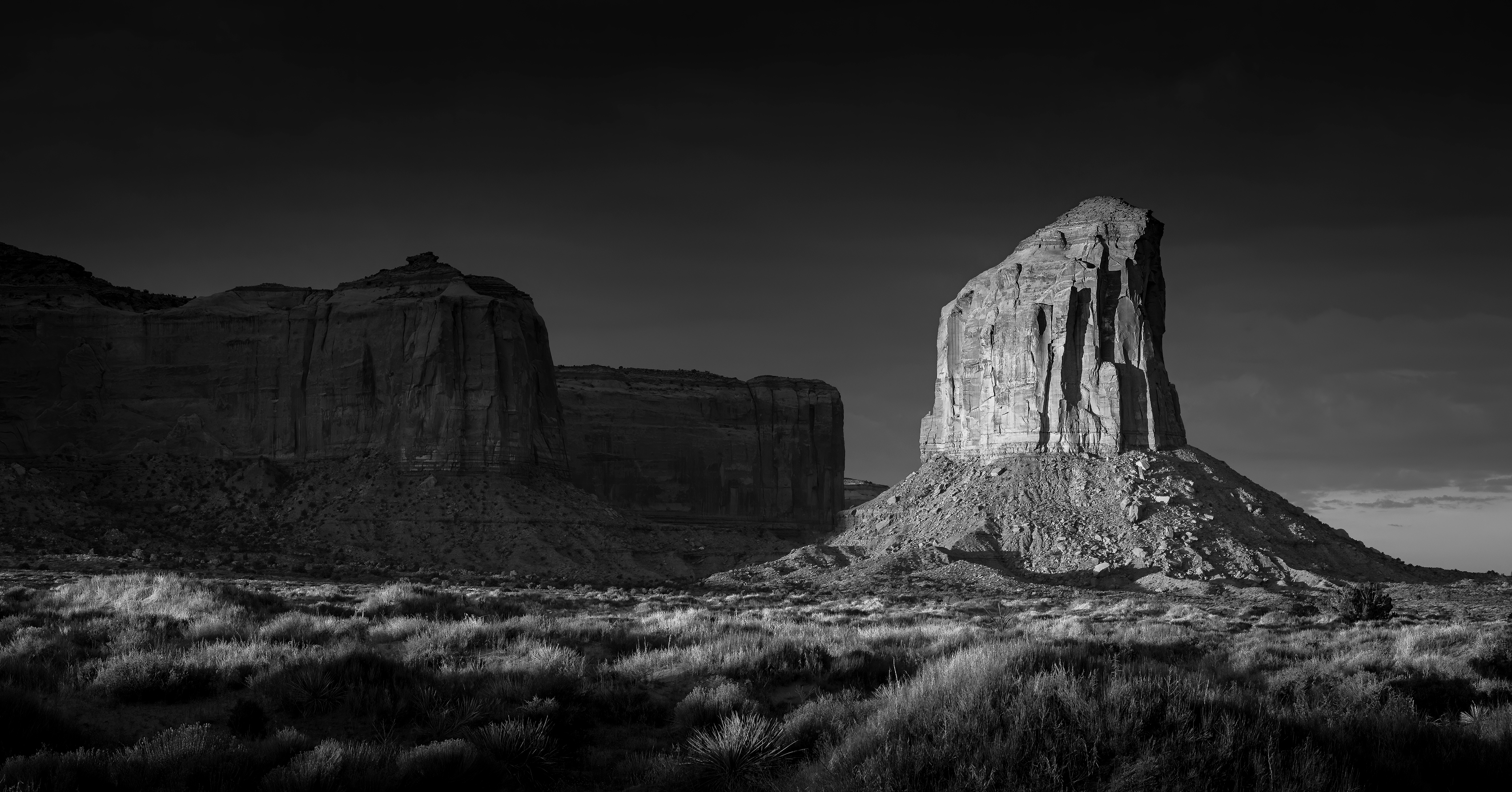
If you look southwest from the visitor center, you’ll see a massive butte rising 6,385 feet into the Arizona sky. That is Gray Whiskers Butte. It isn’t just a pile of rock; it is a permanent sentry, named to honor his spirit and his role as a guardian of the community.
But his greatest legacy isn't made of stone. It’s in the voices of the guides who lead you through the dust today. His great-great-grandson, Harold Simpson, carried that torch forward when he founded Simpson’s Trailhandler Tours. Every time a traveler learns about the "Big Hogan" or the healing properties of a local herb, they are hearing a whisper of the knowledge passed down from Mr. Grey Whiskers himself.
The valley remains a living place, not a museum, because one man with silver in his beard knew the value of staying rooted.